Athlete profile to power KULG Training Intelligence
Workouts alone don’t explain performance. Two runners with identical training load and experience can do the same session and respond completely differently. That's what makes training much more complex than it seems.
We want to help recreational athletes understand how to consider their unique physiology and context when making their next training decision. That’s why we’ve just added a new Athlete profile for runners in KULG.
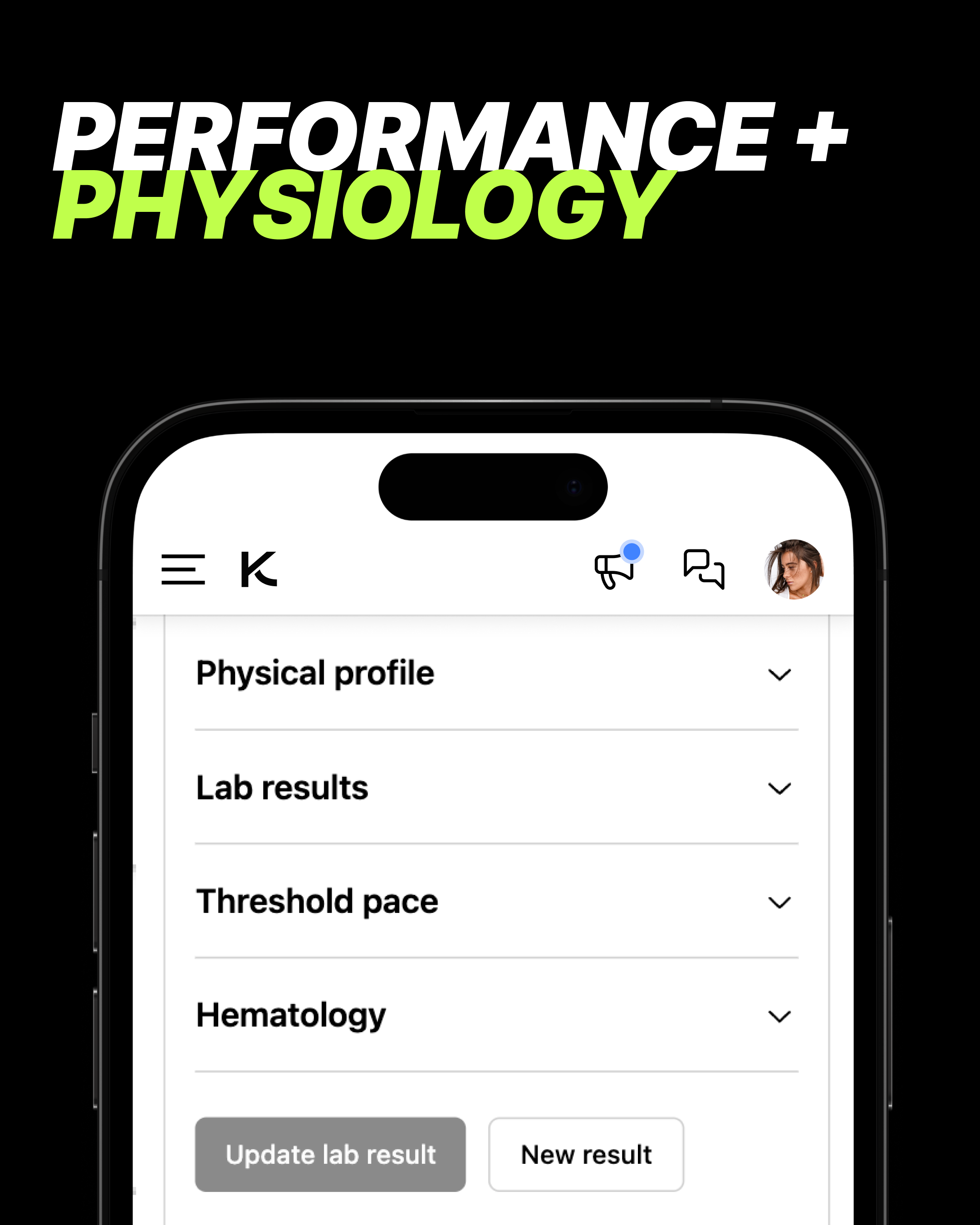
Performance & physiology under Athlete profile
Make your insights more personal
Performance & physiology
Athletes can now add their VO₂max, thresholds, HR zones, key blood markers, body metrics, and more.
Runners can now also define their training profile, current race goal, and injury history under Settings » Athlete profile to provide fully context-aware guidance for runners.
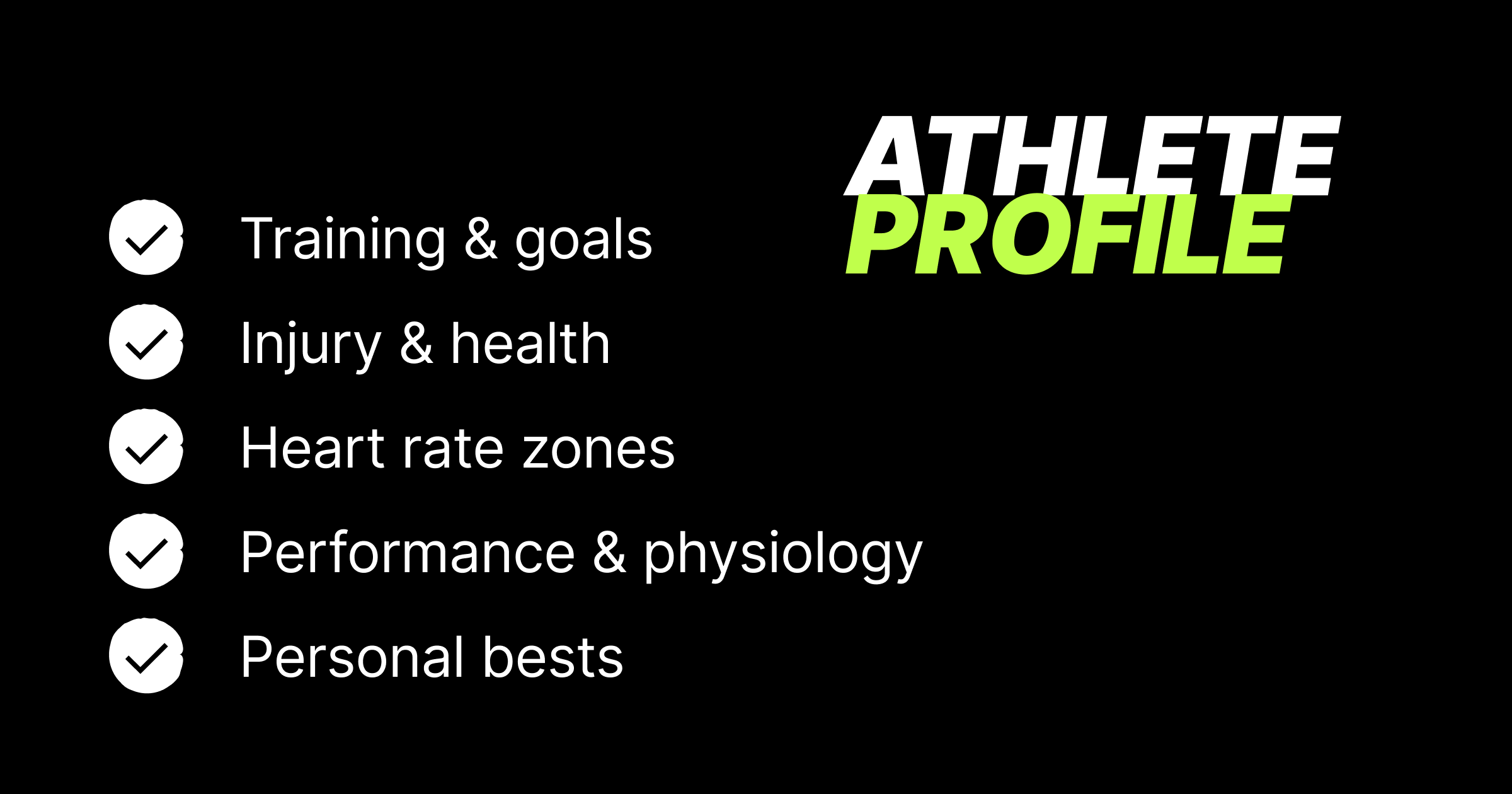
The more information an athlete adds to their Athlete profile, the better KULG Training Intelligence can adapt recommendations to their individual physiology, performance, and recovery.
Training & goals
Runners can view and edit the answers they gave during onboarding - their running experience, weekly mileage, sports, current main goal, and target race (date and name).
Injury & health
Runners can view and edit the answers they provided about their injury history during onboarding and report an injury or health issue by specifying its name and the time frame in which it occurred.
Personal best
Runners can add their personal best times for different race distances.
—
We combine the athlete’s profile info with their training and recovery data, subjective feedback, comments, and tags to give more personal weekly and monthly AI insights and smarter guidance with the Training Assistant. The more an athlete uses KULG as a training diary and shares their thoughts and plans, the more valuable those insights become.
This information will also power KULG AI training plans that adjust to the athlete’s individual physiology, fitness and recovery context, combining it with evidence-based training principles.