
The KULG method: Why insight beats tracking
You have access to more data than ever. Your watch logs your pace, cadence and ground contact time. Your app provides you with fitness, readiness and training load scores. Every run is captured, uploaded and analysed within seconds.
And yet, for most runners, something is still missing.
Not more data. Not another metric. It's the one thing that all those numbers fail to provide: understanding.
The problem with how we currently track
Modern running platforms are built around the session. How was today's run? What was your pace? Did you hit your zones? The feedback loop is immediate, reactive, and relentlessly focused on the present moment.
This isn't entirely wrong. But it is incomplete.
A single run tells you almost nothing about whether you are improving as a runner. A bad session could indicate overtraining. Or it could be due to poor sleep, a stressful week or a slight change in the weather. A fast run could signal genuine fitness gains. Or simply favorable race-day conditions. Taken on their own, individual sessions are not very reliable and offer a limited view of what is really happening.
The problem isn't your data. The problem is the context in which it's being presented.
Zoom out
KULG starts with one simple instruction: zoom out.
Not just from today. Not just from this week. Zoom out to the month, the quarter or the year. That is where the truth lies.
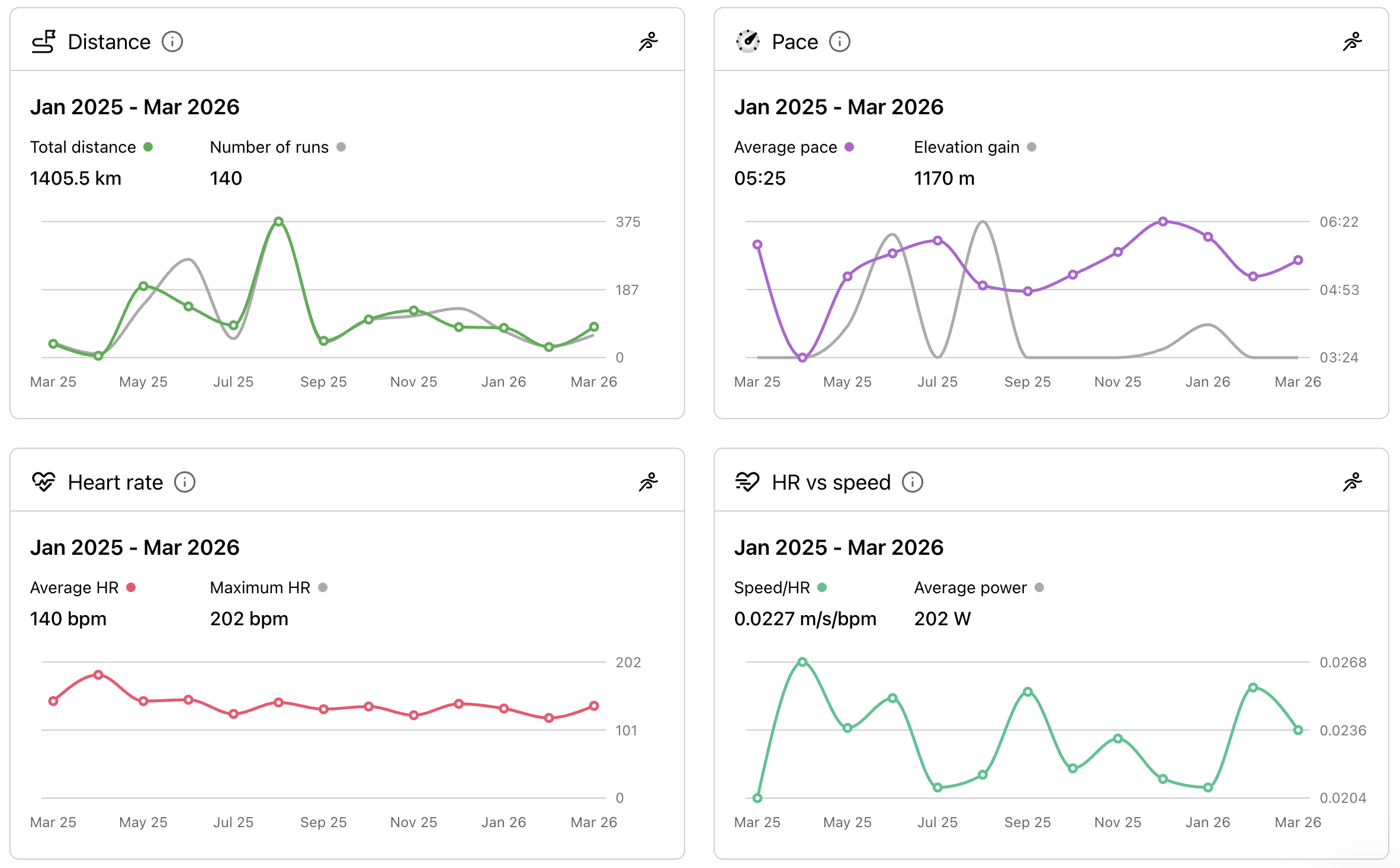
KULG dashboard gives a complete picture of your entire workout history
When you look at six months of training in a single view, something shifts. Patterns emerge that are invisible at the session level. You see the quiet build of volume in the weeks before your race. You see the dip that came after a period of high stress. You see the slow, steady improvement in how fast your heart rate recovers, which shows an aerobic development that cannot be revealed by a single workout.
At KULG, we believe that meaningful progress only becomes visible at scale. A single data point is noise. A hundred data points viewed together over time become a signal.
Context is everything
Metrics without context are almost meaningless.
For example, a pace of 5:30 per kilometre could be either fast or slow, depending on whether it was a tempo run or an easy jog. Similarly, a high heart rate could be worrying or normal, depending on whether you slept for four or eight hours. A drop in your HR vs speed ratio could mean fatigue, illness, life stress or simply a hot day.
Data doesn't interpret itself. It needs context, and this comes from the full picture of your training life, not just the numbers.
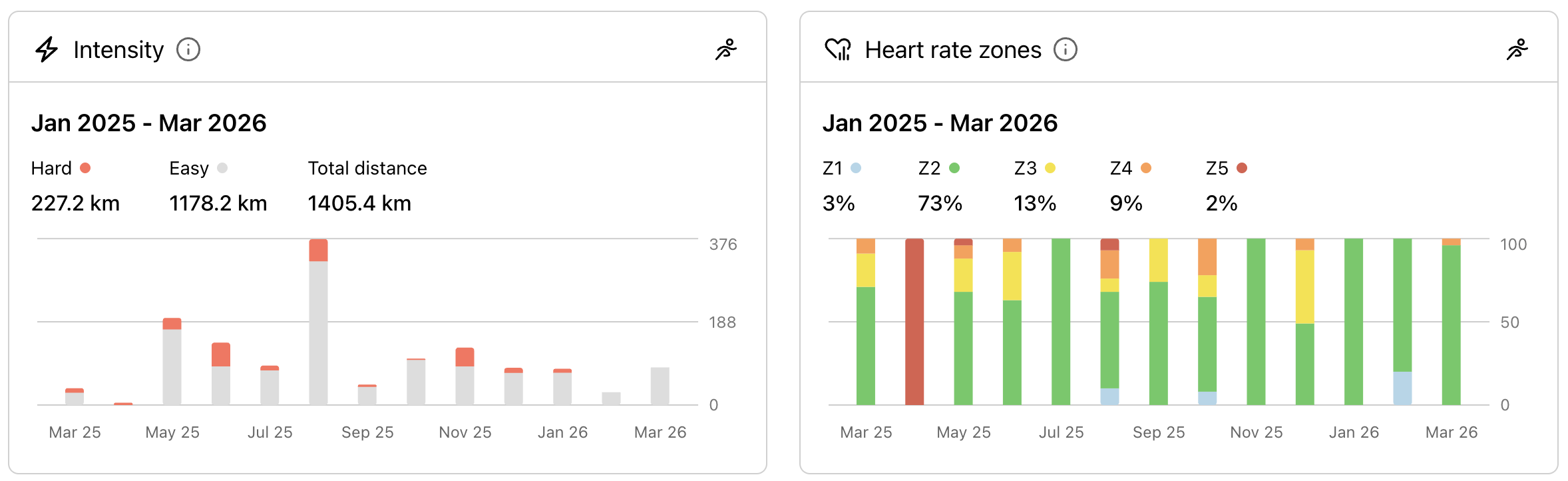
Volume matters. But so does intensity and progression
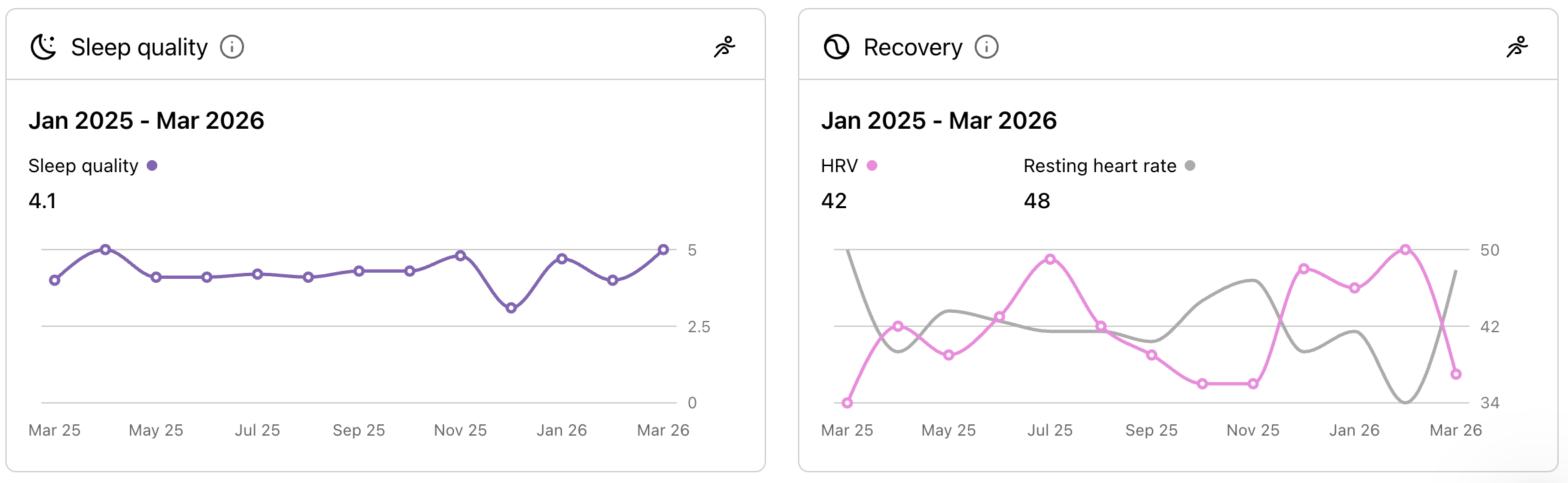
Training is highly dependent on the context of recovery
This is why KULG considers subjective experience equally as important as objective measurement. How you felt on a run matters. Your perceived effort matters. The sleep you got the night before matters, too. When you combine these human signals with your physiological data, you gain a complete picture of how your body responds to training over time.
Feeling and data, together
In modern training culture, there is a tendency to treat numbers as truth and feelings as unreliable. At KULG, we reject this.
Elite coaches have always been aware that how a session feels (perceived effort, mood and energy levels) carries information that cannot be fully captured by sensors. A runner who completes a technically perfect workout but feels flat and depleted is telling you something important. So is a runner who runs slower than planned but feels strong and confident.
It's been well-proven that your mood is a good indicator of how you adapt to training stress. If you start to feel edgy and not up for training, you may actually need a rest.
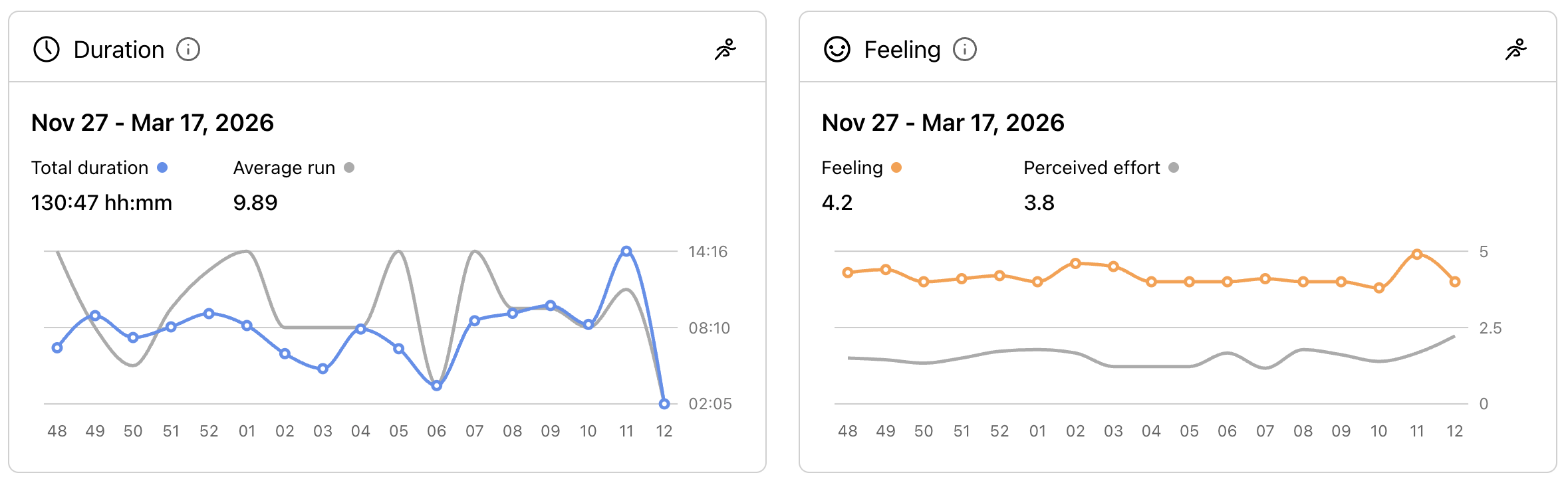
Tracking RPE and feeling reveals the adaptation to training stress
KULG combines the two. It asks you to record not only what your body did, but also how it felt to do it. Over time, this combination of feeling and data reveals patterns that neither could show alone. You will discover the training rhythms that make you thrive, the load that pushes you towards fatigue and the conditions under which you perform best.
Sustainable over optimal
KULG is not about peak performance this week. It is not about hitting optimal numbers or chasing the perfect training score. It is about building the best version of yourself over months and years, which requires a different kind of discipline.
Sustainable progress is quieter than optimal performance. It involves cut-back weeks when your body needs rest. It involves easy runs that feel almost embarrassingly slow. It means choosing consistency over intensity, season after season, because a runner who trains well for three years will always outperform the one who trains perfectly for three months.
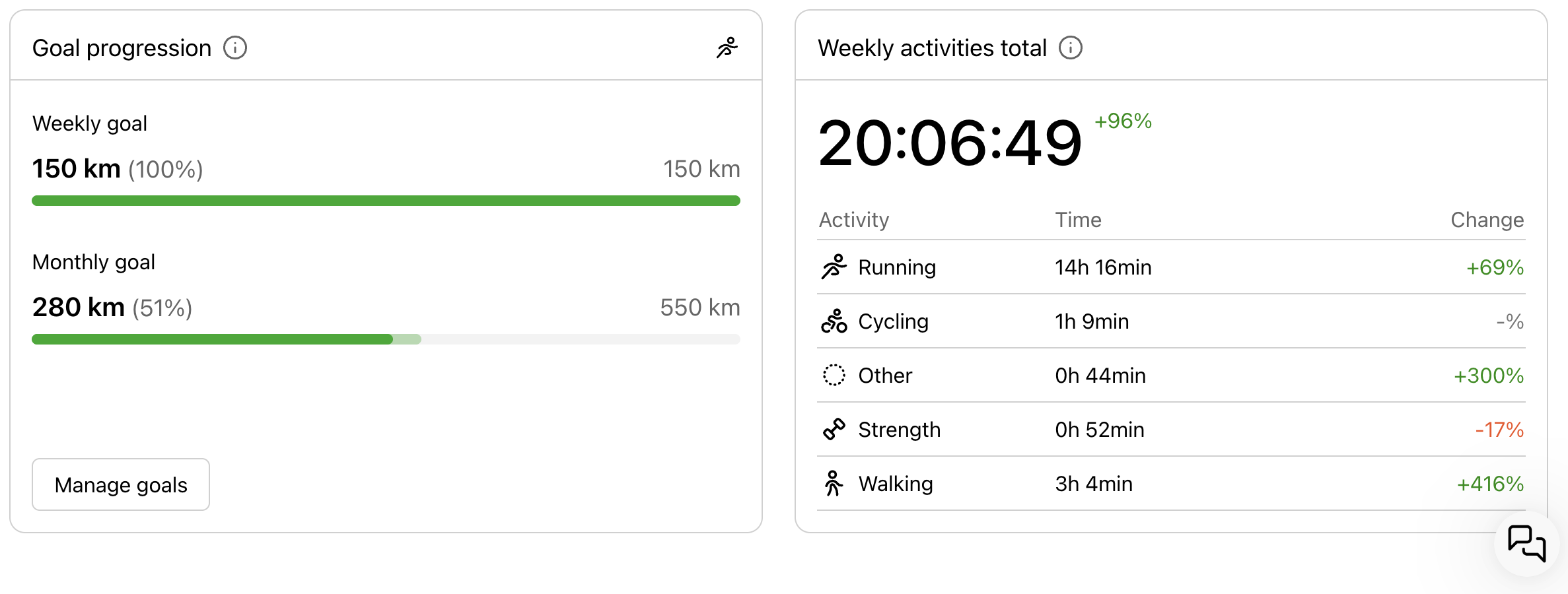
Setting process goals leads to sustainable progress
This philosophy runs counter to the sense of urgency projected by most training apps and much of running culture. But it is an approach that the best coaches have always practised and the most durable runners have always embraced.
A shared language for coaches and athletes
For coaches, KULG offers something beyond analytics. It offers a shared language.
One of the most common frustrations in coach-athlete relationships is the gap between what the coach sees and what the athlete feels. The coach looks at the data and sees overtraining. The athlete feels fine and wants to push harder. Or the athlete is exhausted but the numbers look normal.
When both coach and athlete are looking at the same long-term view (the same trends, the same patterns, the same feeling graphs alongside the same heart rate data) that gap closes. Conversations become grounded. Decisions become collaborative.
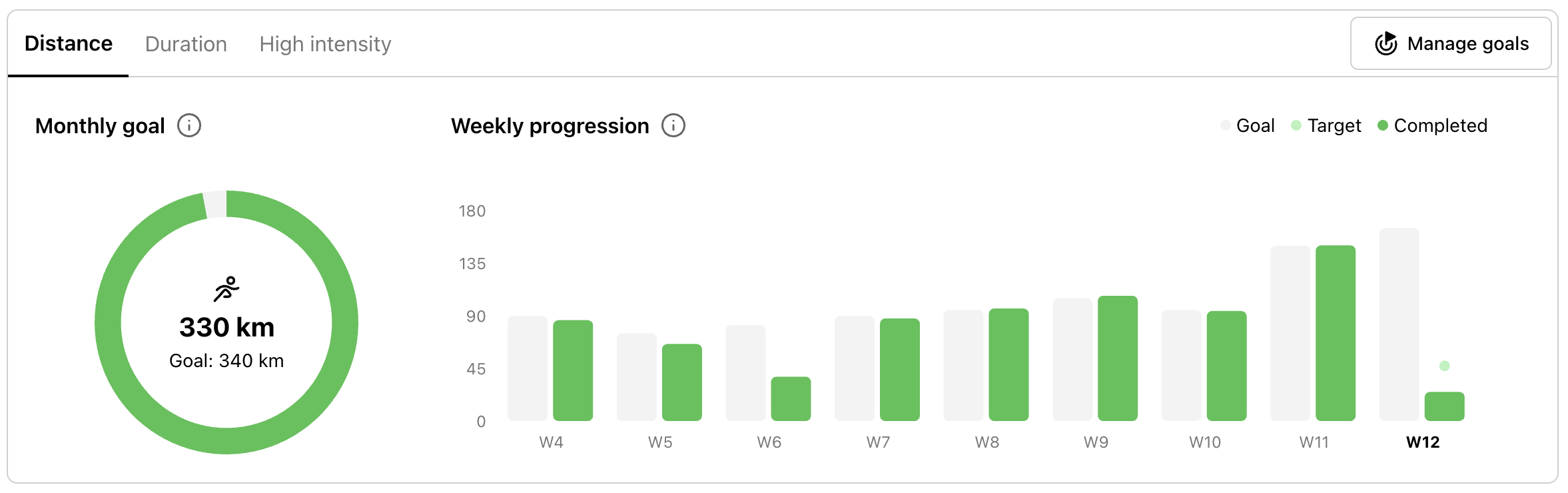
Weekly and monthly goals vs completion
The KULG Planner makes this practical: coaches can build and share weekly training plans directly to an athlete's calendar, while shared goal setting (tracking distance, duration, or intensity week by week) keeps both sides aligned on where the training is headed and whether the load is on track.
The training process becomes something that is built together rather than being dictated from above.
The deeper purpose of KULG is not just to help individual runners understand their training, but also to strengthen the relationship between coaches and athletes, making it more honest and more effective.
What running looks like when you zoom out
The best runners are not necessarily those with the most data. They are the ones who understand their data; who can look at a six-month graph and see more than just numbers. They see a story. It's a story of effort and recovery, growth and setbacks, and the gradual improvement in fitness that eventually pays off on race day.
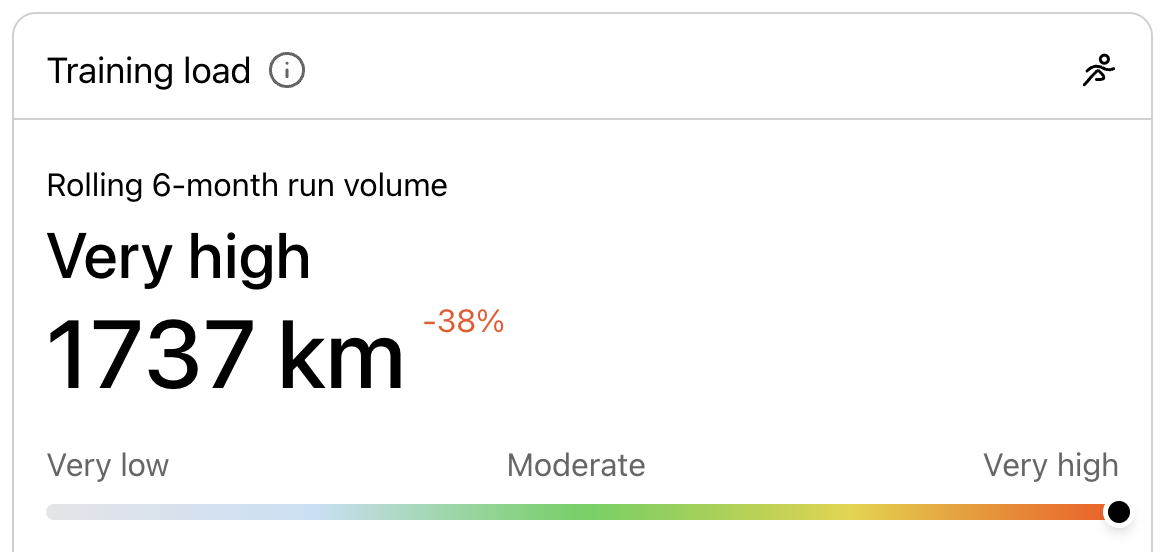
KULG training load compares recent training to your last 6 months
That is what KULG is here for.
Not more noise. More clarity. Not more tracking. More meaning.
See what your training looks like when you zoom out. Start for free with KULG.
